Summary: Visiting KSR Global Aquarium with kids goes smoothly when you arrive early to beat the heat and crowds, plan around nap times for younger children, prioritise the bird park and fish feeding for the biggest hit with young kids, pack sun protection and a change of clothes, and set expectations about the adventure zone in advance. A little planning turns a good family day into a genuinely easy one.
The park itself is built with families in mind, but a few small planning choices make a real difference to how smoothly the day actually goes with young children in tow. None of these tips require much extra effort, just a bit of forethought before you arrive.
Here are seven that experienced parents consistently mention, grouped by when they matter most.
Before You Arrive: Timing and Packing
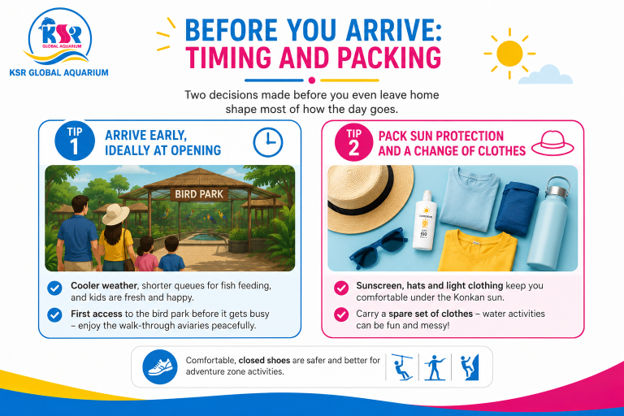
Two decisions made before you even leave home shape most of how the day goes.
Tip 1: Arrive Early, Ideally at Opening
Arriving close to opening time means cooler temperatures, shorter queues for popular spots like fish feeding, and kids who are fresh rather than already tired from a hot car ride. This single decision affects almost everything else about how the day goes.
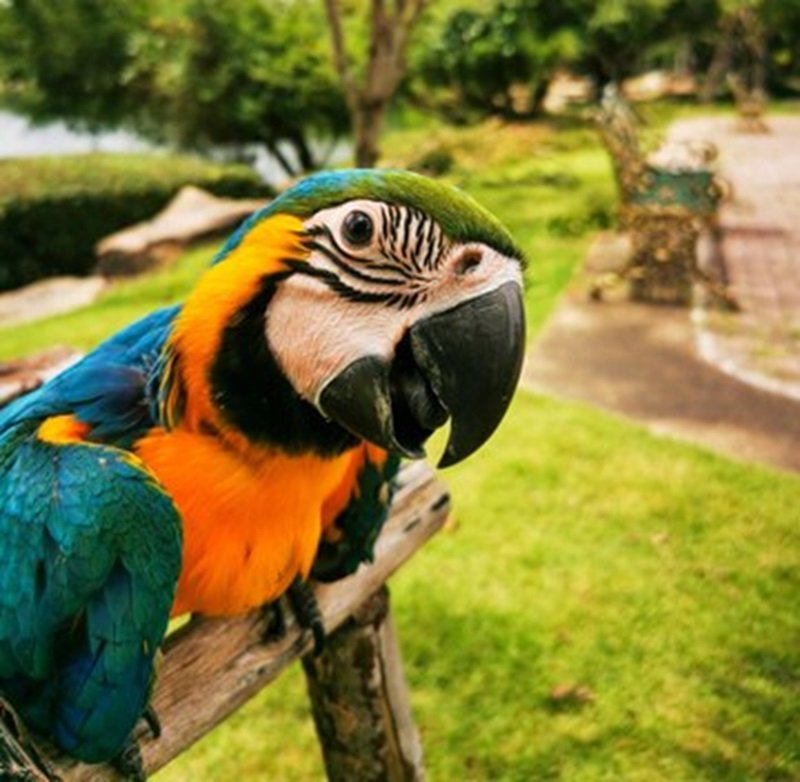
Early arrival also gives you first access to the bird park before it gets busy, which matters since walk-through aviaries are considerably more enjoyable for young kids without a crowd pressing in around them.
Tip 2: Pack Sun Protection and a Change of Clothes
Sunscreen, hats, and light, breathable clothing matter more than people expect, since a lot of the park is outdoors and Konkan sun can be intense even outside peak summer. A spare set of clothes is worth packing too, especially if fish feeding or any water-adjacent activity is on the agenda.
Comfortable, closed shoes are worth prioritising over sandals if your kids will be doing any of the adventure zone activities, since most rides have basic footwear requirements for safety.
Planning Around Your Kids’ Rhythm, Not Against It
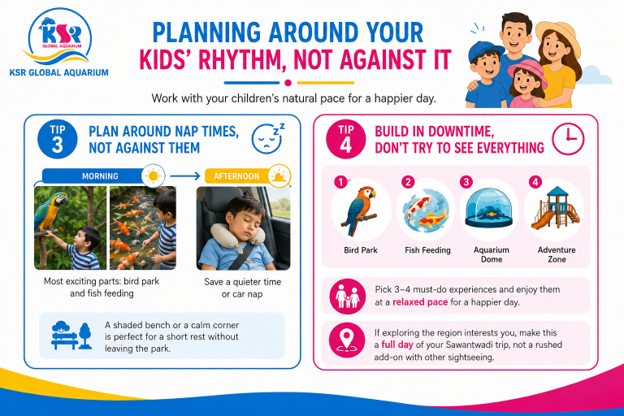
Two more tips are about working with your children’s natural pace rather than fighting it.
Tip 3: Plan Around Nap Times, Not Against Them
If you have toddlers or younger children who still nap, structure your visit so the most stimulating parts, the bird park and fish feeding, happen in the morning, saving a quieter stretch or a car nap for the early afternoon. Fighting a nap schedule usually ends in a meltdown nobody wanted.
A shaded bench near the dome or a calmer corner of the grounds works fine for a short rest if you’d rather not leave and come back.
Tip 4: Build in Downtime, Don’t Try to See Everything
Trying to fit every single attraction into one visit with young kids usually backfires, leading to a cranky afternoon rather than a happy one. Picking three or four priority experiences and moving through them at a relaxed pace tends to produce a far better day than rushing to see it all.
If your family has more than a passing interest in the wider region, treating this as one full day of a longer Sawantwadi trip, rather than trying to combine it with other sightseeing on the same day, keeps the pace sustainable for younger children.
Choosing What to Prioritise
Once you’re at the park, two tips help decide what to actually do first.
Tip 5: Prioritise Fish Feeding and the Bird Park First
Fish feeding and the walk-through bird park are consistently the biggest hits with young children, more so than the adventure zone, which tends to appeal more to older kids and adults. If your group has a mix of ages, doing these hands-on experiences early keeps the youngest members engaged before attention spans wear thin.
These experiences also work well regardless of a child’s age, unlike some adventure activities that have height or age minimums, which makes them a safe bet to anchor your day around.
Tip 6: Set Expectations About the Adventure Zone in Advance
Go-karting, zip-lining, and river-crossing activities typically have age or height minimums, so it’s worth checking these before you arrive rather than having a disappointed child discover a restriction on the day. A quick look at current requirements saves an awkward moment at the ride entrance.
For younger children who don’t meet the minimums, framing the adventure zone as “something for when you’re bigger” ahead of time tends to land better than an on-the-spot explanation.
Tip 7: Bring Snacks and Water, But Don’t Skip the On-Site Food Entirely
Packing some snacks and a refillable water bottle keeps kids fuelled between meals without needing to stop for food every time hunger strikes. That said, budgeting for at least one proper meal on site keeps the day simpler than trying to avoid all on-site spending.
Keeping kids hydrated matters more in the Konkan heat than parents sometimes account for, particularly if the adventure zone activities are on the itinerary, since those tend to be more physically active than the aquarium and bird park.
Making the Day Genuinely Easy for Families
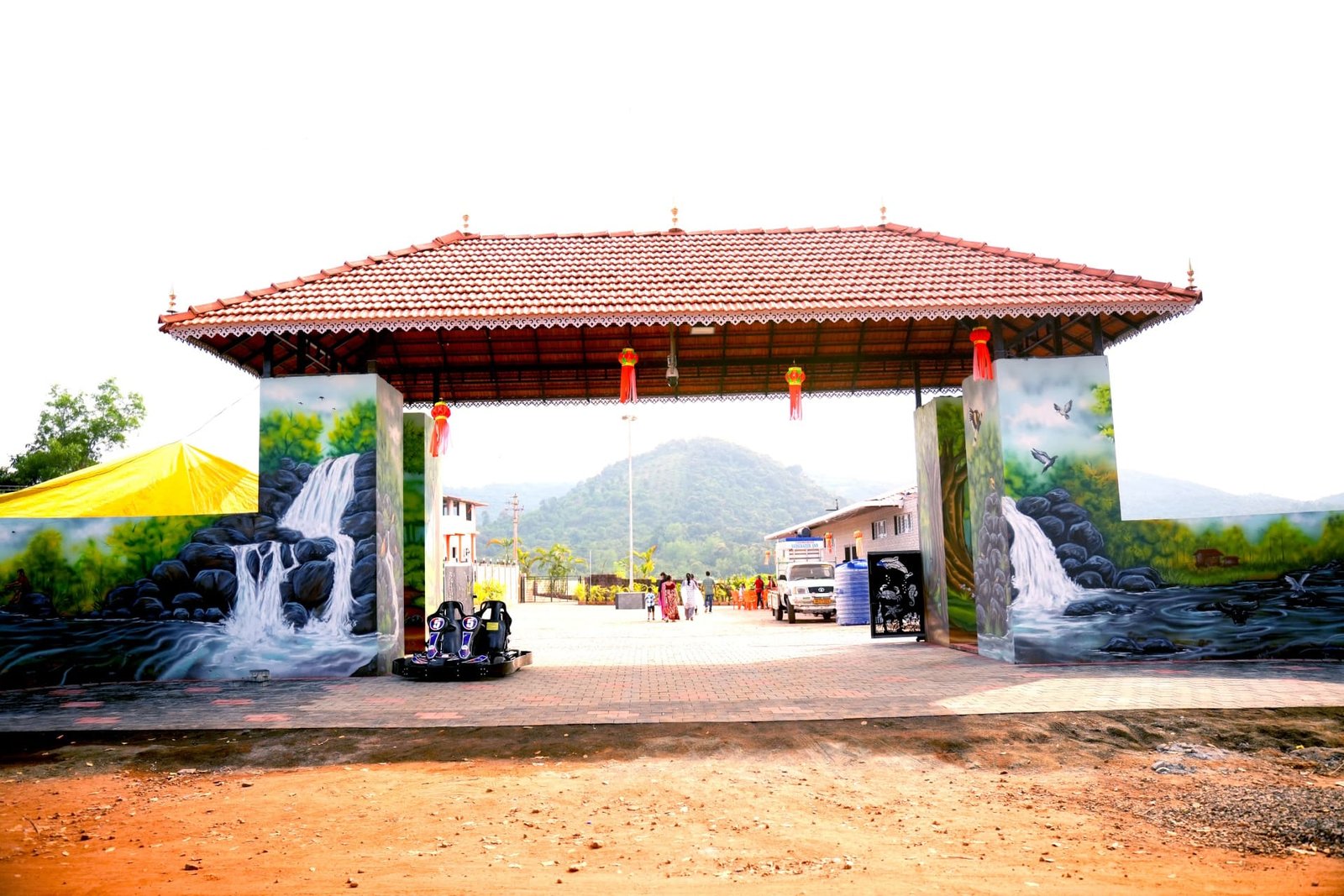
KSR Global Aquarium in Kesari, near Sawantwadi, is designed with exactly this kind of family visit in mind, combining an aquarium, bird park, butterfly and reptile dome, agro tourism, and adventure activities in one clean, walkable setting. The compact layout means you’re not managing long, tiring walks between attractions with tired kids in tow.
Checking current timings before you travel, especially around holidays and the monsoon, helps you plan an early arrival with confidence rather than guessing.
Frequently Asked Questions
What’s the best time of day to visit with young children? Early, close to opening. Cooler temperatures, shorter queues, and fresher kids all make the first couple of hours the easiest and most enjoyable part of the day for families with young children.
Are there age or height restrictions for the adventure zone activities? Yes, most adventure activities like go-karting and zip-lining have minimum age or height requirements. Checking current requirements before your visit avoids disappointment for children who don’t meet them on the day.
Is the park suitable for toddlers? Yes, the aquarium, bird park, and butterfly dome all involve gentle walking suitable for toddlers, though planning around nap times and bringing a stroller for tired little legs makes the day considerably smoother.
Should we pack food or rely on on-site options? A mix works best. Pack snacks and water for between-meal moments, but budget for at least one proper meal on site to keep the day simple and avoid managing a full packed lunch logistics on top of everything else.
How long should we plan to spend at the park with kids? A half- to full-day work is well for most families with children. Picking three or four priority experiences rather than trying to see everything keeps the pace comfortable for younger kids.
A little planning turns a good family day out into a genuinely easy one. Check current timings, plan around your children’s rhythm rather than against it, and prioritise the experiences that matter most to your family.