By the KSR Global Aquarium team | Updated September 2026 | 9 min read
Go karting is the adventure activity families ask about most when planning a day at KSR Global Aquarium in Kesari, and the questions are always the same three: what it costs, how tall a child has to be, and whether it is safe. Go karting car price at any Indian track is quoted per session rather than per hour, height and age minimums exist for mechanical reasons rather than administrative ones, and a supervised leisure track is a very different thing from competitive racing.
Key insights
- Sessions are sold by laps or minutes, not by the hour, which is why an hourly price comparison never works.
- Height minimums are about reaching the brake, not about age policy dressed up as safety.
- A leisure kart is deliberately slow and deliberately simple: accelerator, brake, steering wheel, no gears.
- Availability moves with the fleet: what is running on a Tuesday is not automatically running on a Sunday.
Before you go
Call before you promise a child a ride. Height minimums, junior karts and two-seaters all depend on which karts are in service that week, and a child who has been told all week that they are driving does not accept “not this time” gracefully at the counter.
Karting sits oddly inside a day at a nature attraction. Everything else on this site is slow: fish, birds, butterflies, a farm. Karting is six minutes of noise in the middle of it, and it is the six minutes a certain kind of twelve year old came for.
This page covers what to expect from karting at a family attraction, what the rules are actually for, how sessions are normally priced, and how to fit one into a day that also has an aquarium, a bird park and a working farm in it.
Current pricing, kart specifications and the minimum height at KSR should be confirmed at the counter or by phone before you travel, because all three move with the karts in service.
What kind of kart will you actually be driving?
Not the kind you see on television, and that is deliberate.
Where a leisure kart sits in the range
Karts cover an enormous span. They vary widely in speed and specification, from recreational rental karts to high-performance racing karts, and competitive classes are commonly defined by driver age, engine type, chassis specification and weight.
A rental kart at a family attraction sits at the bottom of that range on purpose.
| Kart type | Built for | Where you meet it |
| Leisure or rental kart | Durability and predictability | Family attractions, indoor tracks |
| Junior kart | Smaller frames, lower speeds | The same tracks, on request |
| Two-seat kart | An adult driving with a child aboard | Family venues, where available |
| Competition kart | Speed and lap time | Licensed race circuits |
What the controls are
An accelerator, a brake and a steering wheel. A governed engine, a low centre of gravity, a full protective frame around the driver, and no gearbox to think about.
That simplicity is the accessibility. A first-time driver who has never held a steering wheel can complete a session safely, which is not something you can say about most motorsport.
Why the speed number misleads you
Do not judge the experience by the top speed on a sign. You are sitting a few inches off the surface with no suspension worth the name, and on a compact track that makes a modest number feel considerably faster than the same number in a car. Visitors who arrive unimpressed by the specification usually get out grinning.
Why do height and age limits exist?
Because the kart has to fit the driver rather than the other way round. Three mechanical reasons sit behind every minimum you will meet at any track.
The pedals
A driver whose feet cannot reach the brake fully cannot stop the kart. This is the single most common reason a height minimum exists, and it is not negotiable at a well-run venue.
The seat and harness
Restraints are sized. A driver too small for the seat moves around inside it under braking and cornering, which is a worse outcome than not being restrained at all.
The steering
Karts have direct, unassisted steering. Turning it under load takes a certain amount of arm strength, and a driver who does not have it will understeer straight into the barrier they were trying to avoid.
Age, which is about judgement rather than reach
Age minimums exist alongside height because reacting correctly matters as much as fitting the car. Internationally, karting is regulated by the FIA under the name CIK, permitting licensed competition racing for anyone from the age of 8 onward, and leisure tracks generally set their own thresholds along similar reasoning.
What to ask if your child is under the minimum
Many venues run junior karts with lower speeds and smaller frames, and some run a two-seat kart that lets an adult drive with a child as a passenger.
Ask specifically about both rather than accepting a general no. The answer depends on which karts are operating that day, and the person at the counter can tell you in one sentence.
What are the track rules, and why do they matter?
Track rules at a leisure venue exist almost entirely to prevent the two things that actually cause injuries: contact between karts, and drivers leaving the vehicle at the wrong moment.
The briefing, which is not a formality
- Attend the safety briefing properly. It covers the flags, the racing line and what to do if you spin, and it is the difference between a spin that is funny and a spin that is not.
- Helmets stay on for the entire session. Not lifted, not adjusted, not pushed back while the kart is moving.
- Hair tied back, nothing loose. Scarves and dupattas come off before you get in. Anything that can reach a moving part is removed first.
The flags
| Flag | What it means | What you do |
| Yellow | Caution ahead | Slow down, no overtaking |
| Red | Session stopped | Slow, return to the pit lane |
| Chequered | End of session | Complete the lap, come in |
Three flags. Learn them in the briefing and you will never need anyone to explain them again.
The two rules that actually prevent injuries
No deliberate contact: bumping is the fastest way to be pulled off the track, and it is also the mechanism behind most kart injuries, because a kart hit from behind on a corner does something a kart never does on its own.
Stay in the kart if you stop: marshals come to you. Getting out on a live track is the most dangerous thing a driver can do at a karting venue, and it is the one rule people break out of embarrassment rather than ignorance.
What does a session cost and how long does it last?
How Indian tracks price karting
Almost universally by the session, counted in laps or in minutes, rather than by the hour.
| What varies | Typical position |
| Session length | Roughly five to ten minutes, or a fixed lap count |
| Kart type | Junior and two-seat karts often priced differently |
| Group bookings | Sometimes priced separately from single sessions |
| Combination with entry | Varies by venue and by season |
What KSR publishes
General entry at KSR Global Aquarium is Rs 100 for an adult and Rs 50 for a child, and adventure activities are charged separately from that. For the current rate, session length and the karts in service, check the go karting page or call the site before travelling.
Why kart availability changes the answer
Kart availability at any venue depends on maintenance, and a track running a reduced fleet on a given day changes what is on offer and sometimes what it costs. That is normal at every track in the country, and it is the reason a phone call beats a website for this one question.
Is leisure karting safe?
What the equipment is doing
A helmet, a full frame around the driver, a sized restraint, a governed engine and a marshalled track. Each of those removes a specific failure mode, and together they are why supervised leisure karting has the safety record it does despite looking alarming from the fence.
Who should sit this one out
Anyone below the venue’s stated minimums, anyone with a back or neck condition, and anyone who has just eaten a full farm-to-table lunch. The last one is not a safety rule so much as a comfort one, but it is the advice most often ignored and most often regretted.
How does karting fit into a day at KSR?
Karting is a short, high-intensity activity dropped into a long, slow day, and where you put it matters more than you would expect.
Where to place it
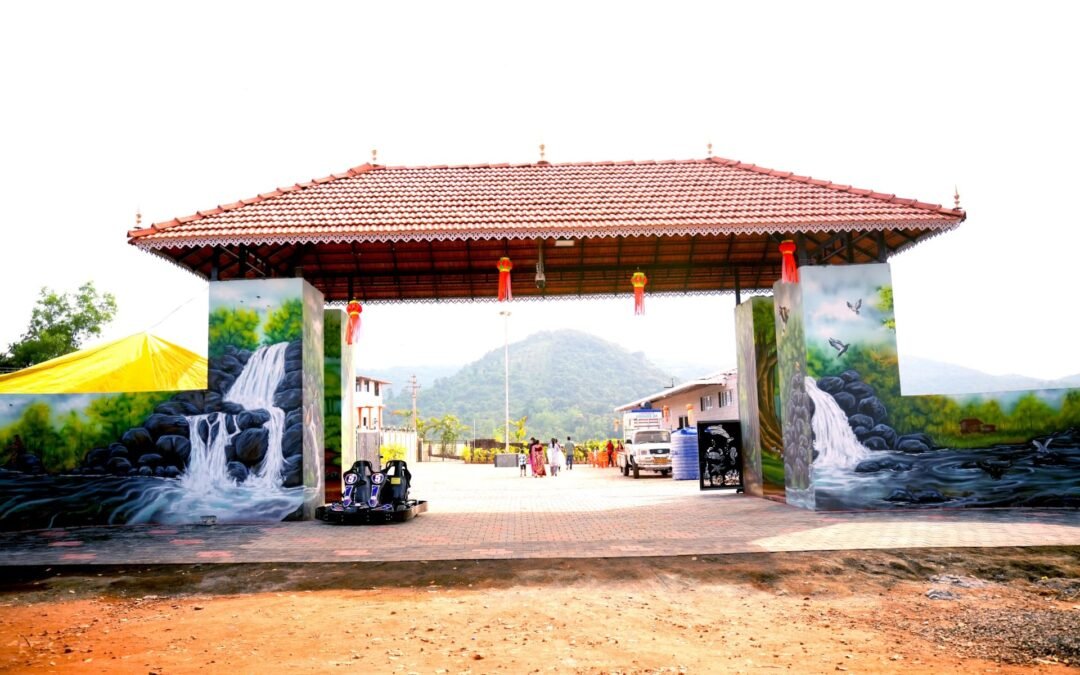
The site at Kesari holds a two-storey aquarium organised by natural habitat, a walk-through bird park, the Dome of Colors butterfly and small-animal section, an agro tourism farm, a fish feeding pond and river-crossing experiences. Sindhudurg district, where all of this sits, is the least populous district in Maharashtra, which is a large part of why a day here feels unhurried in a way an attraction near a city never does.
The natural slot for a session is late morning or the second half of the afternoon, with the indoor aquarium taking the hottest hours in between.
Two scheduling rules
Do not kart straight after a heavy meal. On a warm Konkan afternoon this goes beyond uncomfortable.
Do not leave it to the last twenty minutes. Sessions run to a queue, and arriving late means either rushing the rest of the site or missing the karting entirely.
Wrapping up
Karting at a family attraction is a simpler proposition than the word suggests. The kart is deliberately slow, the controls are deliberately basic, the rules exist for mechanical reasons, and the whole thing lasts a few minutes and costs a session fee rather than an hourly rate.
The two things worth doing before you travel are calling to confirm what is running and what it costs, and checking the minimums against the child you are planning to put in the kart. Both take one phone call, and both prevent the version of this day where someone is disappointed at a counter.
Call ahead, confirm what is operating, then build the day around the weather. Check the day’s programme and book ahead before you set out.
FAQs
How much does go karting cost at KSR?
Adventure activities are charged separately from the Rs 100 adult and Rs 50 child general entry. Per-session rates depend on the karts in service, so confirm the current figure at the counter or by phone before travelling.
Is there a minimum height for go karting?
Yes. Tracks set a minimum so a driver can reach the brake pedal fully and fit the seat and restraints properly. The figure varies with the kart, so check the current minimum before promising a child a ride.
Can young children ride with a parent?
Many venues run two-seat karts or lower-speed junior karts for exactly this. Ask specifically when you book rather than assuming, because availability depends on which karts are operating that day.
Do I need any driving experience?
No. Leisure karts have an accelerator, a brake and a steering wheel with no gears to manage, and every session begins with a safety briefing. First-time drivers complete sessions comfortably.
What should I wear for go karting?
Closed shoes, comfortable clothing with nothing loose, and long hair tied back. Scarves, dupattas and anything that can catch in a moving part must be removed before you get into the kart.
How long does a karting session last?
Indian leisure tracks generally run sessions of roughly five to ten minutes or a fixed number of laps rather than selling time by the hour. Confirm the format at the venue, since it varies with the karts in service.