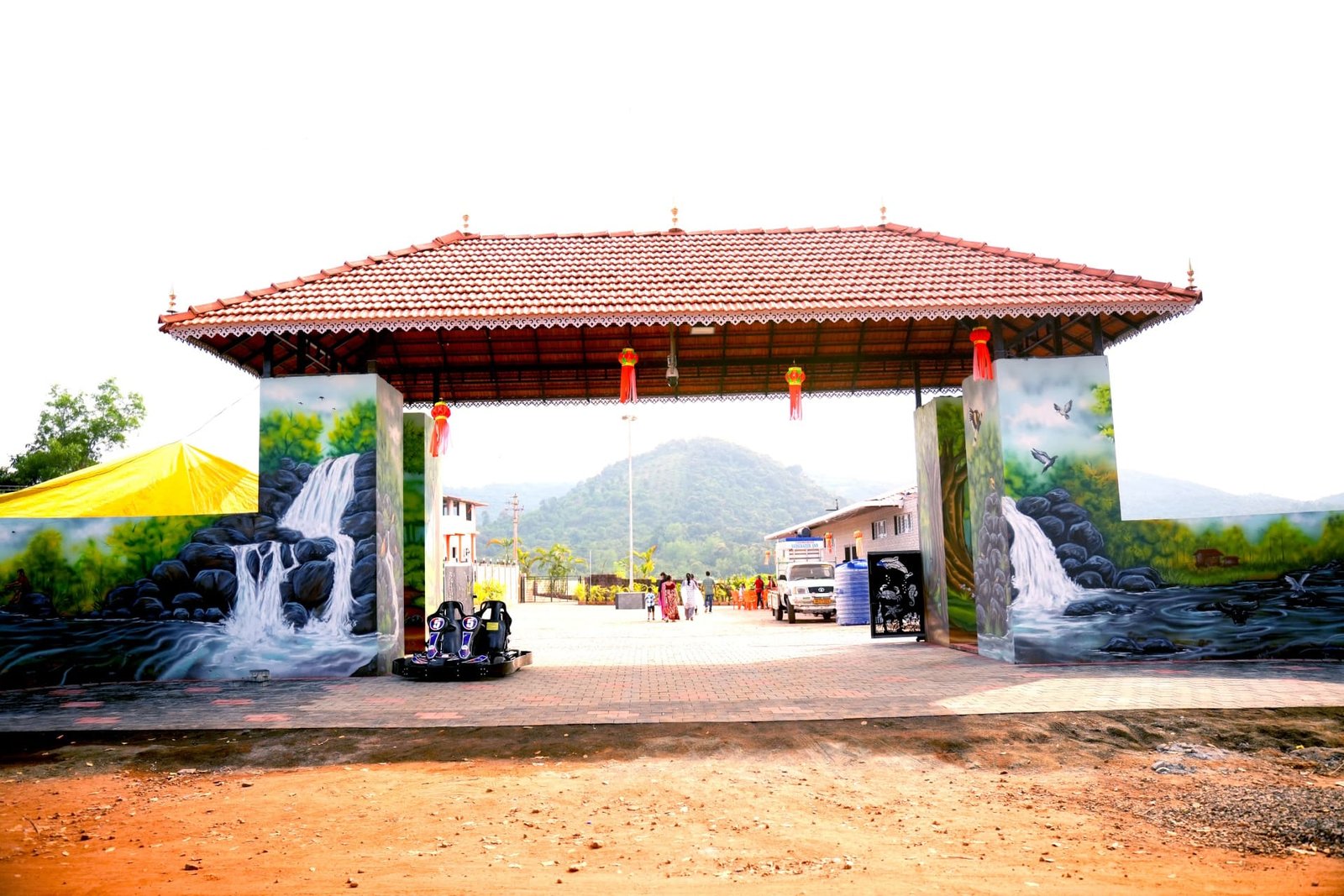
By the KSR Global Aquarium team | Updated September 2026 | 9 min read
KSR Bird Park is the walk-through aviary section of KSR Global Aquarium at Kesari in Sindhudurg. You move through it as a route rather than around a single enclosure: a poultry cage first, then emus, golden pheasants and geese in the open areas, then the Exotic Birds Cage with macaws, lories and sun conures, and finally the pond birds. Give it 45 minutes to an hour. It sits inside the general entry ticket of Rs 100 an adult and Rs 50 a child.
Key insights
- The route runs least exotic to most exotic: the poultry cage first, the macaws near the end, which is why people who start impatiently end up glad they walked it in order.
- 45 minutes to an hour is the honest number, and families with small children routinely take longer than that without noticing.
- Early morning and late afternoon are when the birds do things: midday in the Konkan is the worst window for watching birds anywhere.
- The whole park is inside the Rs 100 ticket, which is the part visitors most often get wrong when they plan the day.
Before you go
Walk the bird park first, not last. The birds are awake and calling in the first two hours after opening, and by the time most day visitors finish the aquarium and wander over, the same enclosures look half asleep. It is the same park. It is not the same visit.
Most people book a trip here for the fish. The aquarium is the name on the board, it is the building you see first, and it is what gets described to friends afterwards. The bird park tends to get treated as the thing you walk through on the way.
That ordering is backwards, and it costs you the better half of the morning. The aquarium is indoors, climate controlled and identical at 9am and 2pm. The bird park is outdoors, and it has a good hour and a bad hour.
What follows is the route in the order you meet it, what to look at in each part, realistic timings for who you are travelling with, and where the whole thing belongs inside a day that also carries fish, fields and butterflies.
What do you actually see, in the order you see it?
The park is laid out as a walking sequence, and the birds get progressively more exotic as you go. That is a deliberate build, and it works best if you resist skipping ahead to the macaws.
The poultry cage, which everyone underestimates
This comes first and gets written off in about four seconds by most adults. The birds cannot fly high, so what you watch instead is how each one moves on the ground, and no two of them do it the same way.
Children do not write it off. They will stand here for fifteen minutes while you check your phone, and it is the single most common reason a family’s bird park timing runs over.
Emus and golden pheasants in the open section
The emus are hard to miss and genuinely large. The emu is the third-tallest living bird after the common ostrich and Somali ostrich, growing up to 1.9m in height, and a robust bipedal runner capable of 48 km/h when it wants to be. Standing next to one with its neck fully up is the moment first-time visitors describe afterwards.
The golden pheasants are the colour highlight of the same stretch. An adult male is approximately 100cm in length, with the tail accounting for two-thirds of that, and weighs around 500 to 700g. The wing colouring is what draws the peacock comparison, though the two birds are nothing alike in behaviour.
The white and black geese, roaming free
Out of the cage and moving around the space on their own terms. This is where children run and where the geese decide, individually, whether that is acceptable. It usually is.
The Exotic Birds Cage
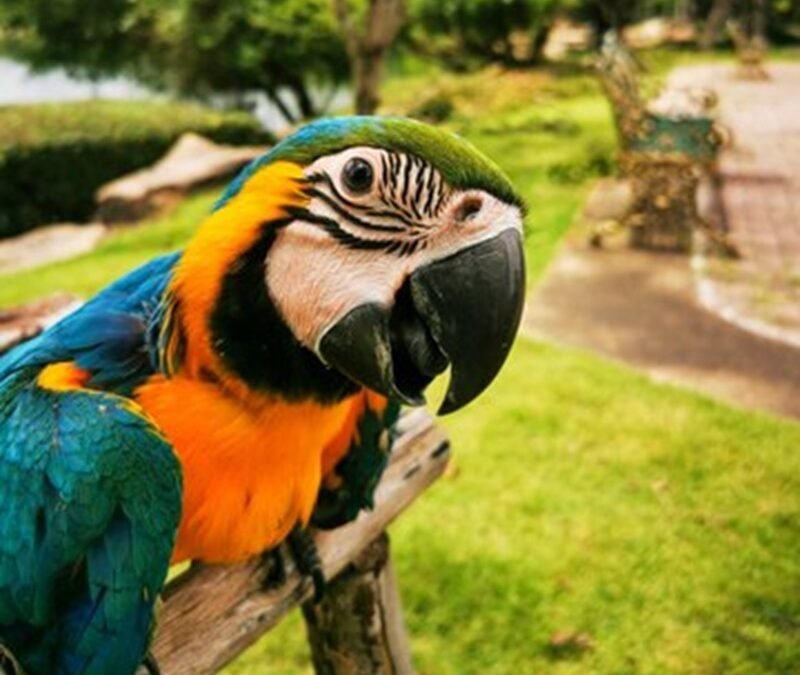
Macaws, lories and sun conures. This is the most photographed section of the park by a distance, largely because these are birds most Indian visitors have only seen in pictures or in films.
Stand still here for two minutes before lifting a camera. The birds settle, and a settled macaw is a considerably better photograph than a startled one.
The pond birds at the end of the route
Crested ducks with crests on their heads, which move like they hold the deed to the water. Shirazi birds, which invite feeding. And the quails, sparrow-shaped and unremarkable on paper, which quietly hold people’s attention longer than anything else in the park.
How long does the bird park take?
Budget 45 minutes to an hour for an unhurried walk through the bird park on its own. That figure moves considerably with who is walking it with you.
Timing by who you are travelling with
| Who is visiting | Realistic time | What drives it |
| Two adults, walking steadily | 30 to 40 minutes | Straight walk, a few stops |
| Family with young children | 60 to 75 minutes | The poultry cage and the geese |
| Family with teenagers | 40 to 50 minutes | Exotic cage, mostly for photographs |
| Anyone photographing seriously | 90 minutes and upward | Waiting for the birds to settle |
| Elderly visitors, unhurried | 60 minutes with seated breaks | Shade and pacing, not distance |
Where the time actually goes
Not where the map suggests. On paper the exotic cage looks like the centrepiece and the poultry cage looks like an entrance. In practice, families spend the most time at the two ends of the route, at the ground birds and at the pond, and pass through the middle faster than they expected to.
Plan for that rather than against it. If you have ninety minutes, that is a comfortable full visit, not a rushed one.
Why rushing it costs you the best part
A bird park is not an exhibit you view. It is a place where things happen if you are still for long enough, and every single one of those things is missed by a group walking at conversation pace. The visitors who report the best experience are, almost without exception, the ones who ran out of things to hurry towards.
When is the best time to visit?
Two separate questions sit inside this one: what time of day, and what time of year. The first matters more than most people expect.
Time of day, and why it matters this much
Birds are most active in the cooler parts of the day, and that is not folk wisdom. Research from the Cornell Lab of Ornithology on tropical forest species found that highly territorial birds and omnivorous species were much more likely to be active singers during dawn hours, and that light levels alone did not explain the pattern, which challenges the older assumptions about why the dawn chorus happens at all.
The practical version for a visitor is simple. Early morning and the last couple of hours before closing give you movement, calling and feeding behaviour. The middle of a Konkan afternoon gives you birds sitting in shade doing nothing, which is a reasonable decision on their part and a poor one on yours.
Time of year on the Konkan coast
| Season | Months | What it is like |
| Post-monsoon and winter | October to February | Mild, active birds, the reliable window |
| Pre-monsoon summer | March to May | Workable if you arrive at opening, unpleasant by 11am |
| Monsoon | June to September | Spectacular greenery, harder for the open sections |
October through February is the honest recommendation. The monsoon is beautiful and the site around it is extraordinary, but a walk-through aviary in continuous rain is a different proposition from a walk-through aviary in November.
Weekday against weekend
Crowds change bird behaviour as much as they change yours. A busy Sunday means noise, and noise means birds retreat to the back of enclosures. A weekday morning is not a slightly quieter version of the same visit. It is a different one.
What does it cost, and what else is on the same ticket?
General entry runs to Rs 100 an adult and Rs 50 a child, and the bird park sits inside that rather than beside it.
What the ticket covers beyond the birds
| Section | What it is |
| KSR Aquarium | Two storeys, split by habitat into freshwater, marine and brackish |
| KSR Bird Park | The walk-through aviary covered on this page |
| Dome of Colors | Western Ghats butterflies, plus turtles, iguanas and small animals |
| KSR Agro Tourism | Fields you work in, and a kitchen fed by them |
| Fish Feeding | Koi and goldfish pond, hand feeding |
| River Cross Walk and Adventure Bridge | The crossing experiences |
What is charged separately, and what is not open yet
Adventure activities are charged separately from general entry. A few sections listed on the website, including the Amphibian Park, Detox City and the Hot Air Balloon, are listed as not yet open.
Confirm the current position at the counter or by phone before building a day around any single attraction, because what is running on a given day is the one thing a website cannot promise you.
What should you carry, and how should you behave around the birds?
A bird park rewards a small amount of preparation more than an aquarium does, because here the animals respond to you.
The kit list
- Water and a hat: substantial parts of the route sit in open sun.
- Closed shoes: the ground is uneven in places and the geese have opinions about open toes.
- A zoom lens if you own one: the exotic cage sits at a distance that phone cameras handle badly.
- Wet wipes: entirely for the children, entirely predictable.
How to behave around the birds
- Move slowly and keep voices down: birds settle around calm visitors and retreat from loud ones, so the quietest group in the park reliably sees the most.
- Do not feed anything unless staff say you can, and then only with food they hand you. Feeding here is a managed activity, not an improvised one.
- Turn the flash off: it startles the birds and produces a worse photograph anyway.
- Let the geese come to you: chasing them is the single fastest way to end the encounter.
One thing worth doing deliberately
Watch how the staff interact with the birds. The birds respond differently to people they know, and five minutes of watching that tells you more about how the park is run than any signboard on the fence.
How the bird park fits into a full day
The order that works
- Arrive at opening and walk the bird park while the birds are active.
- Head out to the working farm while the outdoor block is still comfortable.
- Eat on site through the worst of the sun.
- Take the aquarium in the early afternoon, indoors and cool.
- Finish outdoors at the Dome of Colors, the fish feeding pond or the river crossing as the day cools.
Two mistakes families make
The first is treating the bird park as a corridor to the aquarium. The second is arriving at midday and concluding the birds are dull. Both are timing problems wearing the costume of a quality problem.
Wrapping up
The bird park is the section of KSR Global Aquarium most affected by when you show up, and the one least affected by how much you spend. It is inside the Rs 100 ticket, it takes about an hour, and it is a completely different attraction at 9am than it is at 2pm.
Walk it in the order it was built. Start at the poultry cage even though it looks like nothing, be still at the exotic cage, and leave enough time at the pond, because the quails are where people end up staying.
Come early, walk the birds first, and keep the indoor aquarium for the hottest part of the day. Book an early slot at KSR Global Aquarium before you set out, particularly on a weekend.
FAQs
Where exactly is KSR Bird Park located?
It is part of KSR Global Aquarium at Kesari, Maharashtra 416510, in Sindhudurg district on the Konkan coast. The site is an easy trip from Sawantwadi, and reachable from Goa or Kolhapur with an early start.
How long should I keep aside for the bird park?
Between 45 minutes and an hour for a relaxed walk through. Families with young children routinely take 60 to 75 minutes, because the poultry enclosure and the free-roaming geese hold small children far longer than adults expect.
What is the entry fee for the bird park?
General entry to KSR Global Aquarium costs Rs 100 an adult and Rs 50 a child, and the bird park is covered by it. Some individual experiences on site carry separate charges, so confirm current pricing at the counter.
What birds will I definitely see?
The park’s own listing covers poultry birds, emus, golden pheasants, white and black geese, macaws, lories, sun conures, crested ducks, Shirazi birds and quails. Which of them are active depends heavily on the hour you visit.
Is it suitable for very young children?
Yes, and it tends to work better for them than an indoor attraction does. The ground-level poultry section and the free-roaming geese are the parts that hold small children, and the route is walkable at a toddler’s pace.
What is the best time of day to visit the bird park?
Early morning, at or near opening, followed by the last couple of hours before closing. Birds are most active in the cooler hours, and the middle of a Konkan afternoon is the least rewarding window for watching them.